Though often neglected in accounts of Dr Ambedkar’s life, his conversion to Buddhism on 14th October 1956 must, from a Buddhist point of view, be ranked among the most momentous events of the 20th century. The period between that conversion and his death on 6th December was tragically brief. Yet, as Sangharakshita went so far as to claim, ‘…though Bhimrao Ramji Ambedkar had been a Buddhist for only seven weeks, during that period he had probably done more for the promotion of Buddhism than any other Indian since Asoka’.1 Considering that Asoka’s conversion (about 100 years after the Parinirvana) resulted in the greatest Buddhist empire the world has ever seen, Ambedkar’s historical significance could hardly be more strongly stated.
What is perhaps less plain is the more universal significance of his life and thought. Subhuti has summarized this as follows: ‘Ambedkar is the first significant individual to apply the principles of the Dhamma to modern democratic society and to show how they are indispensable to the creation of a just, free, equal and harmonious society anywhere in the world’.2 It is this aspect of Ambedkar that I wish to explore here.
Before beginning I want to explain how these articles came about. Since 2016 I have been going to India regularly to help with the Buddhist revival there. I do so as a member of the Triratna Buddhist Order, and my brief has been to communicate the teachings of Urgyen Sangharakshita, our founder and principal teacher. But as those whom I befriend and teach belong, in the main, to a community associated with Dr Ambedkar, I naturally became interested in the life and thought of the great man. This gradually developed into a serious study, which has continued intermittently to this day. Although by no means an expert, I am very much an admirer, and this has increased the more I have studied him. This admiration will inevitably be different from that of his followers: he hasn’t liberated me in the way that he has liberated them. I look at him from a distance, but with an acknowledgment of his greatness and significance.
At around the same time that I began reading Ambedkar my own thinking about politics took a new direction. I have long been troubled by the divisive effect that politics can have within a spiritual community. Prompted by some conversations with Subhuti, my friend and mentor, I have been trying to articulate a perspective on the relationship between Buddhism and politics that allows for a sympathy with a wide variety of political views without aligning the Dharma with any of them.
Then, in studying Ambedkar I found to my delight that he had already covered this ground, and that what I was looking for could be found in his work, at least implicitly. To understand how requires us to delve into his thinking, and into how he saw Buddhism in relation to society. While this has been done to some extent by others (including both Sangharakshita and Subhuti), there is more that can be drawn out. I believe there are implications in his thought, not yet fully explored, which can bridge the seemingly incommensurable realms of politics and spirituality — a true vein of gold waiting to be mined.
Navigating Ambedkar
In approaching Ambedkar in this way there are a few issues to navigate. One reason I suspect his thought is not better understood is that he wasn’t primarily a theoretician. In his Annihilation of Caste he described himself as a man ‘almost the whole of whose public exertion had been one continuous struggle for liberty for the poor and for the oppressed’. So while his thought is of great theoretical interest, his universal insights are rooted in this struggle and its Indian context. In this regard, Ambedkar could be compared with Edmund Burke, whom he admired. Burke also worked out his ideas not in the abstract but as an active participant in politics, responding to the issues of his own time and place. Also, Ambedkar didn’t lay out an original political philosophy in systematic form. Much of the time he was drawing on other people’s ideas. Nevertheless, he not only brought a distinctive perspective to those ideas, but also applied them, on a global stage and for the highest stakes. In Ambedkar’s life and work one can see the influence of ideas and their consequences in shaping the world we live in.
Another issue is that Ambedkar wrote a lot. His collected writings and speeches in English fill approximately twenty substantial volumes (depending on the edition), and the contents are not all of equal interest because he was often addressing issues peculiar to Indian public life at the time. (There is also a substantial body of work in Marathi, much of which, being untranslated, is unknown to me.) Scattered among this material there is much that is of universal relevance, but some extraction of gold from dross is necessary. Moreover, the gold is not always fully wrought. Whether because he only explained things enough to serve the purpose in hand, or because he himself had not worked out all the implications of his ideas (I suspect a combination of these), further extrapolation is sometimes needed — some of which I will be attempting.
Moreover, one has to bear in mind that Ambedkar said different things in different contexts, and that his thinking sometimes changed. He was consistent in his adherence to a set of values, but his understanding of how to apply those values evolved over time, and he adapted his expression of them to different contexts.
To give some idea of the range of his pronouncements, at one time he said, ‘There can be no doubt that the advent of the British in India has been a great boon to the country. Without this providential connection, it seems to me very doubtful if the intellectual awakening of India could have been as great or as fast’.3 Anyone prone to post-colonial guilt may glimpse the possibility of absolution here. However, a few paragraphs later, he says, ‘Is there any parallel to the poverty of the Indian people in any part of the world? Gentlemen, what must be the cause of this? In plain terms, the cause is the deliberate policy pursued by the British in the government of this country.’ This is typical of his ability to see different sides of a question, as befits such a highly trained legal scholar. He could be scathingly critical of the British, but also appreciative of aspects of Western culture and thought, which he recognised as applicable in the Indian context.
Another example is that Ambedkar several times called himself a ‘progressive radical’. It may come as more of a surprise to learn that on another occasion he called himself a ‘progressive conservative’.4 He was, as I’ve said, a great admirer of Burke, a founding figure of British conservatism, who is often quoted in Ambedkar’s writings. It is noteworthy that his descriptions of himself as a radical and as a conservative are both qualified by the term ‘progressive’, implying that, as we shall see, his approach to politics was reformist rather than revolutionary.
Again, at times he talked like a socialist, and at times he said he wasn’t one. He had a rather complex relationship with the socialists of his time. Especially earlier in his career, he was sometimes willing to ally with them on common causes; but later he became critical of them, especially for ignoring the issue of caste. In Annihilation of Caste he said,
The fallacy of the Socialists lies in supposing that because in the present stage of European Society property as a source of power is predominant, that the same is true of India or that the same was true of Europe in the past. Religion, social status and property are all sources of power and authority, which one man has, to control the liberty of another.5
A social critique that emphasizes class struggle can’t, he claimed, be applied in relation to a society in which there is also caste struggle.
Despite these criticisms of the socialists of his day, in general he was what we would now call a social democrat: he was in favour of a strong state, with many aspects of the economy nationalised and constitutional safeguards to protect the disadvantaged. Indeed, he said one point, ‘I do not understand how it could be possible for any future government which believes in doing justice socially, economically and politically, unless its economy is a socialistic economy’.6 But as I said, his thinking changed over time, and it seems that economically he moved towards the centre later in life. He founded three political parties, and the manifesto for the last of these states, ‘The policy of the party is not tied to any particular dogma or ideology, such as communism, socialism, Gandhism. The party will be ready to adopt any plan of social and economic betterment of the people, irrespective of its origin, and provided it is consistent with its principles.’7 That makes clear and explicit his pragmatic rather than ideological approach.
Dewey and Pragmatism
In this pragmatism, we can see the influence in particular of John Dewey. Probably the most prominent American philosopher of the first half of the twentieth century, Dewey was also Ambedkar’s tutor at Columbia University, and was among his main intellectual influences.8 His form of pragmatism rejected claims to universal truth, and the attempt within philosophy to construct systems of ideas that can be examined independent of historical and social context.
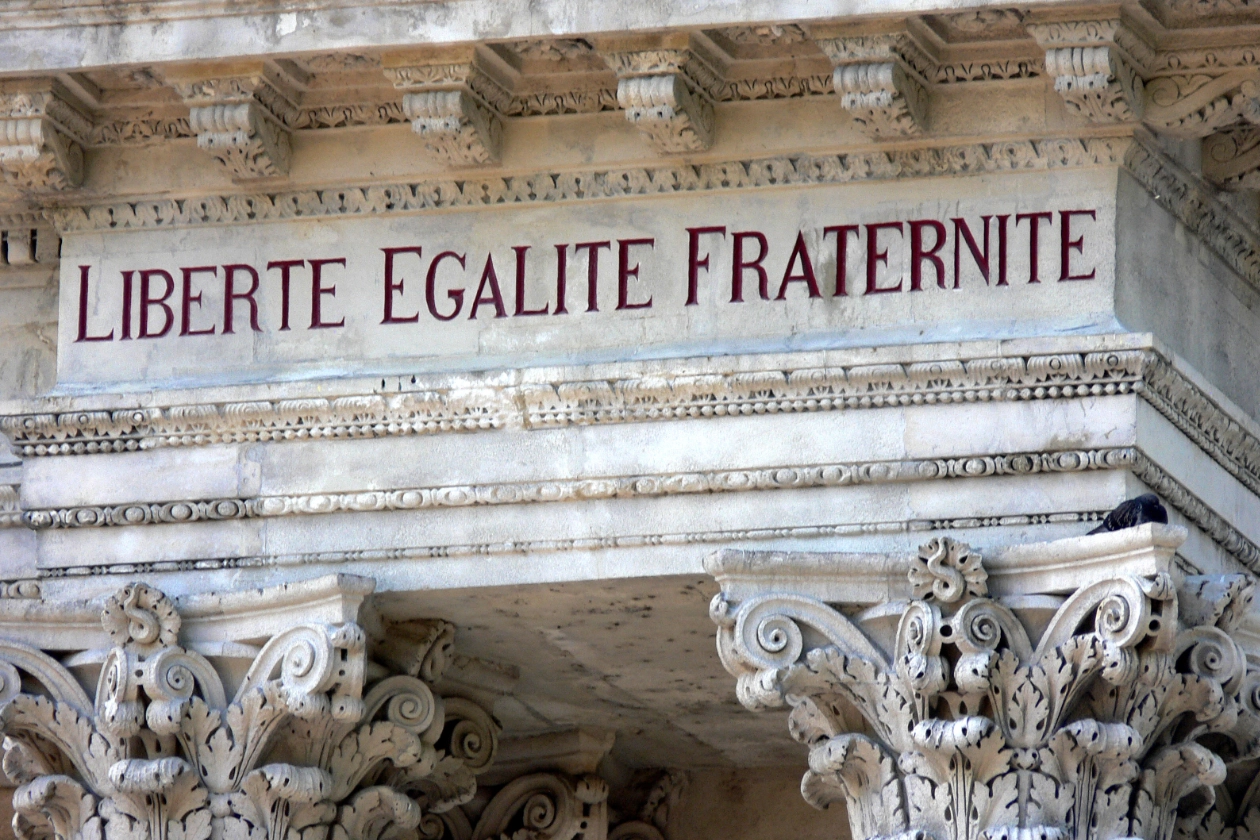
While this approach has considerable merit and was an important development in twentieth century philosophy, it leaves a problem. If one insists on seeing philosophy always in historical and cultural context, what universal values can remain? Resolving everything into historical conditions leads one to relativism. Here Ambedkar looked beyond Dewey. He strongly affirmed a universal morality, and he found it primarily in two places: in the socio-political realm and in the spiritual realm. Socio-politically he found it in what is called the Revolutionary Triad of ‘liberty, equality and fraternity’; and spiritually he found it ultimately in Buddhism. Part of the significance of his life is the bringing together of these two.
Ambedkar and Buddhism
Between Dr Ambedkar’s first contact with Buddhism at the age of 16 and his formal conversion to it at the end of his life there was a gap of half a century. Those fifty years were spent as consequentially as any man of his day, though not in a way one would normally describe as religious or spiritual. Even so, the question of religion preoccupied him for a long time. This was in large part a matter of denouncing what he saw as its harmful aspects. His attacks on Hinduism (a ‘menace to humanity’) are relentless and scathing — and even, understandably, a little one-sided. But he never rejected religion as such, and was in fact concerned to separate true from false religion. For example, in Annihilation of Caste he distinguishes between a religion of ‘rules’ and a religion of ‘principles’: a rule tells us ‘just what to do and how to do it’; a principle ‘guides [an individual] in his thinking by suggesting to him the important consideration which he should bear in mind.’ True religion (he tells us) ‘must mainly be a matter of principles only. It cannot be a matter of rules. The moment it degenerates into rules it ceases to be Religion, as it kills responsibility which is the essence of a truly religious act.9 Hinduism, of course, is not truly religious in the sense defined: ‘To put it in plain language, what the Hindus call Religion is really Law or at best legalized class-ethics. Frankly, I refuse to call this code of ordinances, as Religion.’ He continues,
While I condemn a Religion of Rules, I must not be understood to hold the opinion that there is no necessity for a religion. On the contrary, I agree with Burke when he says that, “True religion is the foundation of society, the basis on which all true Civil Government rests, and both their sanction.” Consequently, when I urge that these ancient rules of life be annulled, I am anxious that its place shall be taken by a Religion of Principles, which alone can lay claim to being a true Religion.
Over the two decades following these words Ambedkar came to an ever-clearer realisation that it was only the teachings of the Buddha that met this standard.10 One could be forgiven for wondering why it took so long. After all, his formal conversion to Buddhism took place twenty-one years after his famous asseveration, ‘Though I was born a Hindu, I will not die a Hindu’. A full answer would be complex, and would include factors such as his stellar career in Indian public life, which took so much of his energy, and the unimpressive state of the bhikkhu sangha, of which he was highly critical. But part of it surely lies in a difference between his personal disposition and his public role. Personally, Ambedkar was attracted to and even (it seems quite clear from the sources) seriously practising Buddhism for quite a time before he converted. But there was also the public Ambedkar, who was responsible for the fate of hundreds of thousands, even millions of people. In the words of Sangharakshita, ‘He stood virtually alone. He had some lieutenants, as they are usually called in India, very junior colleagues, but they weren’t up to much. Really there was just Ambedkar and the vast illiterate masses.’11 This he was acutely aware of. He knew that these masses, whom he represented and for whom he was the leader and figurehead, would be profoundly affected by his decision to convert. He knew that he was taking people with him and he keenly felt the weight of that. At the time of his conversion he said,
It is a matter of enormous responsibility, really, to educate the people in regard to the merits of this religion and to inculcate in the people the habit of behaving according to the principles of the ‘Dhamma’. There is no other person who had to shoulder so grave a responsibility, nor do I think will anybody be called upon to shoulder such a heavy responsibility in future.12
This shows his awareness of his own historical significance, as well as his solidarity with those whose lives depended on his. It’s hard to think of another individual of such stature who was also so profoundly identified with the fate of so many. He had overcome all the limitations of his lowly birth, yet he never thought of abandoning his people.
Equally importantly, he intended to clarify further the significance of the conversion. Those who followed him down that path did so through faith in him, and after his death they were left leaderless and factional. According to Subhuti, ‘… [Ambedkar’s] conversion to Buddhism, the work that gave him the greatest satisfaction of all his many achievements, is still understood by very few and is often dismissed as a mere political stunt taken in a fit of pique at the failure of his ministerial ambitions.’13
I shall demonstrate shortly that such dismissal is a serious mistake, and that there can be no doubt that Ambedkar’s conversion was spiritually motivated. But first, I must stress that there is an opposite and equally wrong position that might be taken regarding Ambedkar’s conversion: namely, that it was a purely spiritual matter — that is to say, a turning away from society and politics and towards higher things, as though there was no relationship between the two spheres of human life (a misapprehension about religion that is not uncommon in India). In a lecture called ‘What Path to Salvation?’, in which he argued in favour of conversion, he said,
I have decided for myself. My conversion is sure as anything. My conversion is not for any material gain. There is nothing which I cannot achieve by remaining an Untouchable. My conversion is purely out of my spiritual attitude. The Hindu religion does not appeal to my conscience. It does not appeal to my self-respect. However, your conversion will be both for material as well as for spiritual gains. [My italics]
As these words imply, the middle way above and beyond between the two wrong extremes is where the truth of Ambedkar’s conversion lies, and is, in fact, where his unique significance, as both a political leader and a thinker, is to be discovered. It is this that I intend to explore in these articles. I will do so through examining a number of sources in which Ambedkar spoke about Liberty, Equality and Fraternity, his central social ideals, before setting forth his understanding of their relation to the ideals of Buddhism, and extrapolating how this might have developed had he lived long enough to follow through his own line of thought. But first, we must examine the conversion itself, and satisfy ourselves as to its genuineness.
Ambedkar’s Practice of Buddhism
Ambedkar’s conversion to Buddhism was marked by his recitation of the customary Refuge-going formula. But according to Sangharakshita, although Going for Refuge is ‘the central and definitive act of the Buddhist life’, it is not a single act, performed once and for all: ‘With every day that passes, in fact, our experience of Going for Refuge should gain in depth and intensity — should take place within a wider context, and on a higher level.’14 Thus, to be a true conversion rather than a merely formal one, the recitation of the formula must express an orientation of one’s being towards the triple gem that is already underway, and will continue to deepen throughout one’s subsequent life as a Buddhist.
That Ambedkar’s conversion was a genuine spiritual commitment is clear from some of his statements after the conversion. For example,
This conversion has given me enormous satisfaction and pleasure unimaginable. I feel as if I have been liberated from hell. I want each one of you all who got initiated yesterday to realize this by his own experience.15
It is also clear that Ambedkar was practising the Dharma quite deeply before he converted. We have only limited information about his personal life, but glimpses into his inner world are sometimes possible from his correspondence. This, for example:
I have never known what unhappiness is. Whatever the circumstances, I have been always happy. As I look back upon my life, I do not know of any occasion when I had been troubled in mind or had been unhappy. Poverty, social evils, and family troubles have not touched me. I have taken them as the necessary accompaniments of human life. I have been calm in the midst of adversity, prosperous without being arrogant, and happy without indulging in futile optimism or equally futile pessimism… The secret of happiness is simplicity and contentment. If you have these, nothing can disturb your peace of mind.16
This is all the more remarkable if one considers what the ‘poverty, social evils, and family troubles’, to which he almost casually refers, really entailed. Born in poverty, he faced financial problems throughout his life, struggled against entrenched discrimination, and four of his five children and his first wife died. Moreover, he was, especially in his later years, plagued by health problems which eventually killed him when only in his mid-sixties.
In another letter to the same correspondent, written in 1953, he said,
I am never affected by the ups and downs of life. We as children always had to complain about the various wants we suffered from. But my father always used to tell us my dear boys you have at least a room to sleep in. But look at those who are sleeping on the road without cover. If you look at them you will find yourselves happy. I have never forgotten his advice and that is why I am happy in all circumstances, good or bad. You too can be happy if you cultivate this mental frame.
Most people are after carnal joy and engaged passionately in the satisfaction of bodily appetites. But there is such a thing as spiritual joy which comes as a result of good and selfless thoughts and good and selfless deeds. One may not have carnal joy but one can always have spiritual joy. I am happy because of it.17
The fact that the letter continues with a quote from the Dhammapada puts a seal on the fact that here was clearly a man who was practising the Dharma, for whom the formal act of Going for Refuge was the outward expression of an inner spiritual attitude.
Ambedkar’s Understanding of Buddhism
At the same time, it can’t be ignored that there were certain limitations to Ambedkar’s understanding of Buddhism, or at least to the way he presented it. He was, I will argue, too constrained by the rationalism of the European Enlightenment. Before seeing how this manifested, a few considerations will help us see it sympathetically. Firstly, Ambedkar’s higher education took place in the West, and naturally consisted largely in the study of the thinkers — philosophers, economists, legal scholars etc — of the Western, post-Enlightenment tradition. Nor is it surprising that this education found a highly receptive student in Ambedkar. The Enlightenment emerged out of the struggle for intellectual freedom from the medieval dungeon of Christian dogma; and for one raised in and oppressed by the superstition, tribalism, and intellectual confusion of Hinduism, the discovery of a tradition that values free thought, reason, and the primacy of the individual, must have been like breathing freely for the first time.
Furthermore, Ambedkar studied Buddhism without a teacher in the traditional manner, at a time when much of Buddhist scholarship was influenced by ideas imported from the West. Accordingly, not only was he influenced directly by European rationalism, he was also drawing for his understanding of Buddhism upon a tradition of scholarship that was itself so influenced. For example, he wrote a highly complementary preface to The Essence of Buddhism by P. L. Narasu, which draws on the work of Western ‘Orientalists’ and reinterprets the Dharma in terms of European rationalist preconceptions. He also drew for his understanding of Buddhism mainly from Theravada sources, which often contain a similar emphasis.
We can again distinguish different sides of Ambedkar’s character. As well as being a social-reformer and a rationalist he seems to have been on a personal level quite a devotional man, as evidenced by his admiration not only of the Buddha but of the mystical poet Kabir. These two sides of the man reflect two essential aspects of his mission, which was not only to demolish a social order in which the most terrible inhumanity was religiously sanctioned, but also to replace it with a superior religious framework, with a universal morality front and centre. His account of Buddhism must therefore always be read with a background awareness of his animosity towards the superstition and amorality of Hinduism, by which his people had for centuries been enslaved. His attraction to the ideals of liberty, equality and fraternity was in part a response to that — they were, after all, of secular origin. But part of Ambedkar’s significance is that, in spite of the utmost provocation, he refused to give up on religion. He saw that the universal morality to which he was so deeply committed implied a transcendent dimension, which secularism could not accommodate, and which required a religious framing. For this he turned to Buddhism, which he saw as free from those aspects of Hinduism that he so despised. However, the influence from the European Enlightenment remained with him, shaping and in some ways limiting his interpretation of Buddhism. This suggests that he had further to go in integrating the different aspects of his personality and of his social mission.
For an understanding of the way Ambedkar saw Buddhism, the two most significant documents are The Buddha and the Future of His Religion, and The Buddha and His Dhamma. Incidentally, the first of these is significant for historical as well as intellectual reasons. It was on account of its appearance in the Maha Bodhi Journal in 1950 that Sangharakshita (who was later to edit the journal) wrote to Ambedkar a note of appreciation, and received a friendly and encouraging reply. It was on account of this amicable exchange that Sangharakshita visited Ambedkar in Bombay two years later, after which they met twice more, the last time being just three weeks before Ambedkar died. And it was on account of these three meetings that Sangharakshita came to forge a deep link with Ambedkar’s followers, and that the spiritual legacies of the two great men have become so intertwined.
But to return to the point, since it was to the Three Jewels of Buddha, Dharma, and Sangha that Ambedkar went for Refuge, it will be convenient to order our discussion under those headings.
Buddha
One’s impression is that Ambedkar’s attraction to Buddhism was primarily to the person of the Buddha, as an example for humanity.18 (This seems to have begun when, aged sixteen, he read a biography of the Buddha in Marathi, written and gifted to him by a friend of his father’s.19 ) Regarded by the Buddhist tradition as a man who attained a state of transcendence which surpassed ordinary understanding, the Buddha was in a sense both human and more than human. Ambedkar, however, tended to emphasize the human aspect. Sangharakshita described the situation as follows:
Dr Ambedkar had tremendous admiration for the Buddha and strong devotional feelings towards him, and he did believe that the Buddha was an Enlightened human being, and therefore higher than any other human being, but I think his understanding of Buddhism was not such that he could fully appreciate the difference between an ordinary human being and an Enlightened human being. He went some way towards seeing it, but not the whole way. It is quite difficult to see that difference; you need a deep understanding of Buddhism, and some spiritual knowledge and experience. One might say that in his anxiety to show that the Buddha was not God, or an incarnation of God, he probably leaned too far to the other extreme.20
Evidence of this can be found in The Buddha and the Future of His Religion, where Ambedkar contrasts the Buddha with Krishna, Jesus and Mohammed, and claims that unlike them ‘He was born as a son of man and was content to remain a common man and preached his gospel as a common man.’ He also described the Buddha at different times as a rationalist and a democrat, which, if not exactly false, is at least misleading without significant qualification.
Dharma
Ambedkar rightly saw universal morality as foundational to the Dharma. But while it is hardly possible to overstate its importance, it is possible to state that importance in such a way that other — perhaps more esoteric — aspects of the Dharma are diminished by implication. The Buddha and the Future of His Religion contains the following:
The religion of the Buddha is morality. It is imbedded in religion. Buddhist religion is nothing if not morality. It is true that in Buddhism there is no God. In place of God there is morality. What God is to other religions morality is to Buddhism.
Sangharakshita interprets this generously:
This could hardly have been better or more strongly put, though it is important to understand that Ambedkar is not using the word morality in a narrow, legalistic sense but as representing the whole ethical and spiritual dimension of human existence.21
The whole ethical and spiritual dimension of human existence. While one can certainly say that the word ‘morality’ implies a spiritual or even a transcendental dimension, surely we are asking too much of the term if we require it to represent that dimension. This overloading is more explicit in The Buddha and His Dhamma, in which Ambedkar goes so far as to state that ‘Morality is Dhamma and Dhamma is Morality’.22 Such a procrustean equivalence requires us either to stretch the definition of one term or to curtail that of the other, or both.
Ambedkar also tended to emphasize the rational aspects of Buddhism. There were good reasons for this. Buddhism is the most rationally defensible of the world’s religions, and its spirit of empirical enquiry creates an important link with the Western scientific tradition — a link of which Ambedkar, who was railing against a religion dominated by superstition and dogma, was naturally very aware. In The Buddha and the Future of His Religion he quite rightly identifies compatibility with science and reason as one of the features that makes Buddhism suitable for the modern world (the others being that it does not ennoble poverty and is in accordance with Liberty, Equality and Fraternity, of which more in Part 2). However, this too he sometimes overstated. In The Buddha and His Dhamma he says,
This doctrine of Kamma and Causation is the most central doctrine in Buddhism. It preaches Rationalism and Buddhism is nothing if not rationalism.23
He is of course right about the doctrinal centrality of pratītya-samutpāda (dependent arising), particularly in its application to the realm of moral action. However, to describe this in terms of ‘rationalism’ suggests a reductionist interpretation of a doctrine which, according to the Buddha himself, is beyond the reach of the rational mind.
In this light it should come as no surprise that Ambedkar was not entirely comfortable with the doctrine of rebirth. This is understandable given that the Hindu interpretation of it had been used for centuries to justify caste. Although he acknowledged in The Buddha and His Dhamma that the Buddha taught rebirth, he went on to give an account of it which, in its attempt to avoid Hindu eternalism, naively falls into the opposite extreme of materialism, as is clear from the following:
…[the Buddha] said that he was an annihilationist so far as soul was concerned. He was not an annihilationist so far as matter was concerned…. He believed in the regeneration of matter and not in the rebirth of the soul. So interpreted, the Buddha’s view is in consonance with science. It is only in this sense that the Buddha could be said to have believed in rebirth.24
With regard to karma, Ambedkar is on safer ground. As we have seen he strongly believed in a universal moral order, and he was clear that the Buddhist idea of karma, unlike its Brahminical counterpart, precisely referred to this order. In this connection, students of Sangharakshita will be interested to know that in The Buddha and His Dhamma Ambedkar refers to the doctrine of the niyamas,25 which became such a prominent part of the former’s teaching. Moreover, there are important similarities in the use they both made of this doctrine. Both emphasized that the moral order is natural rather than divinely imposed; both recognised that karma does not account for all aspects of human experience — a view that was particularly important for Ambedkar because the Hindu notion of karma was used to justify indifference to the plight of the ‘Untouchables’.26 However, unlike Sangharakshita, Ambedkar makes no mention of the dhamma-niyama, and focusses all his attention on karma, a fact which, in the light of the foregoing discussion, is not without significance.
Sangha
Sangharakshita paid Ambedkar the high complement of saying that he had made him ‘much more aware of the social dimension of Buddhism, in fact the social dimension of existence itself.’27 It was, he thought, an implication of the Buddha’s teaching that had perhaps been neglected by the tradition, and it is one of Ambedkar’s outstanding achievements to have seen it. However, he sometimes took it too far. In The Buddha and His Dhamma he says,
Dhamma is righteous, which means right relations between man and man in all spheres of life. From this it is evident that one man if he is alone does not need Dhamma. But when there are two men living in relation to each other they must find a place for Dhamma whether they like it or not. Neither can escape it. In other words, society cannot do without Dhamma.28
Again we see Ambedkar trying to express a universal morality in contradistinction to Hindu notions of dharma as merely one’s God-given caste duty. However, in so doing he confines the Dharma to its moral and thus to its social aspect, and thereby mistakes a part for the whole. Given this, it is natural that he also tended to see the bhikkhu sangha predominantly in social terms. In The Buddha and the Future of His Religion he gives a number of reasons why the Buddha founded this institution: ‘One purpose was to set up a society which would live up to the Buddhist idea embodied in the principles of Buddhism and serve as a model to the laymen.’ Fair enough, as far as it goes. But then, ‘[another] such purpose was to create a body of intellectuals to give the laymen true and impartial guidance.’ A body of intellectuals! This falls far short of the ideal of a community of individuals dedicated to the attainment of transcendental insight, which is what the bhikkhu sangha ideally represents. Finally, ‘The other purpose of Buddha in founding the Bhikkhu Sangha was to create a society the members of which would be free to do service to the people. That is why He did not want the Bhikkhus to marry.’ Nothing is said about the renunciant lifestyle, including the adoption of celibacy, as the ideal one for the path of higher spiritual development. While none of these statements is exactly wrong, the emphasis they place on the bhikkhu’s relations to wider society is narrowly secular.
These passages will suffice to convey the tenor of Ambedkar’s account of Buddhism, including its limitations. Uncomfortable as it will be for some, these limitations need to be faced if Buddhism is to spread beyond the Ambedkarite community and throughout India, to truly re-establish itself in her soil and revivify her culture. For this, Sangharakshita’s presentation of the Dharma (or something very like it), which agrees in so many respects with Ambedkar’s but is richer and deeper, is urgently needed. This, however, is a topic for another day.
My present concern is to emphasise the influence upon Ambedkar of the rationalism of the European Enlightenment. For both better and worse, that influence shaped his view of the relationship between the Dharma and the socio-political realm. In particular, it led him to express his socio-political ideals in terms of the triad of liberty, equality and fraternity. As we will see in the following articles, his attempt to interpret that triad from a Dharmic point of view, if less than fully convincing, nonetheless opens up a very rich seam to mine.
Footnotes
- Sangharakshita, Ambedkar and Buddhism
- Subhuti, Foreword to Sangharakshita Dr Ambedkar and the Revival of Buddhism I, Complete Works Vol 9, page xi.
- Ambedkar, Writings and Speeches, Vol 17 (iii), p45
- Ambedkar, Speeches and Writings, Vol 14 (i). ‘So far as I am concerned I am a very conservative person: Although some people may not accept that fact, I am indeed very conservative. All I say is that I am a progressive conservative and I should like to tell the House one important fact which I think every one of us must bear in mind, particularly the conservative members of this House. The great political philosopher Edmund Burke who wrote a big book against the French Revolution because of its radicalism and revolutionism did not forget to tell his own countrymen who were very conservative, one very important truth. He said that those who want to conserve must be ready to repair…’
- Ambedkar, Annihilation of Caste
- Ambedkar, criticism of ‘Objectives Resolution’, Writings and Speeches, Vol 13, p9
- Quoted in Omvedt, Ambedkar: Towards and Enlightened India
- See The Evolution of Pragmatism in India by Scott Stroud. Looking at primary sources and original research, the book explores the intellectual debt that Ambedkar owed to Dewey.
- Hinduism, of course, is not truly religious in the sense defined: ‘What is called Religion by the Hindus is nothing but a multitude of commands and prohibitions. Religion, in the sense of spiritual principles, truly universal, applicable to all races, to all countries, to all times, is not to be found in them… To put it in plain language, what the Hindus call Religion is really Law or at best legalized class-ethics. Frankly, I refuse to call this code of ordinances, as Religion.’
- By the time he wrote The Buddha and His Dhamma he was no longer referring to Buddhism as a religion, and in fact explicitly distinguishes between religion and Dhamma.
- Sangharakshita, Complete Works Vol 10
- Quoted in Dr Ambedkar on Buddhism, p30
- Subhuti, Foreword to Sangharakshita Dr Ambedkar and the Revival of Buddhism I, Complete Works Vol 9, page xi.
- Sangharakshita, The History of my Going for Refuge
- Quoted in Dr Ambedkar on Buddhism, p30
- Surendra Ajhat, Letters of Ambedkar
- Ibid
- One could contrast this with Sangharakshita, who, upon reading the Diamond Sutra, awoke to the truth of the Dharma, and said that the Buddha jewel and the Sangha jewel were subsumed under the Dharma jewel for a long time.
- According to Sangharakshita it was The Light of Asia by Edwin Arnold, but we now know that this is not correct.
- Sangharakshita, Complete Works Vol 10
- Sangharakshita, Ambedkar and Buddhism
- Ambedkar, The Buddha and His Dhamma, Book IV, part I, chapter 2
- Ambedkar, The Buddha and His Dhamma, Book III, part IV, chapter 1
- Ambedkar, The Buddha and His Dhamma, Book IV, part II, chapter 2
- The first mention of the niyamas in Sangharakshita’s work is in The Three Jewels, written in 1961. While it is likely that he would have been aware of the teaching through the writings of Caroline Rhys-Davids, it is at least possible that the presence of it in The Buddha and His Dhamma was also an influence.
- E.g. ‘The Law of Kamma has to do only with the question of general moral order. It has nothing to do with the fortunes or misfortunes of an individual.’
- https://soundcloud.com/thebuddhistcentre/becoming-aware-of-social-ills?in=thebuddhistcentre/sets/a-life-in-objects-1955-1965
- Ambedkar, The Buddha and His Dhamma, Book IV, part 1, chapter 5