Buddhism traditionally distinguishes three basic psychological factors that bring about harm. These are craving, hatred and delusion. Individual spiritual progress is made when someone recognises and successfully works to overcome these factors, and their consequences, within their own individual psychological functioning.
But it can also be important to recognise how such factors manifest in societies, cultures and organisations. The healthy functioning of these can be corrupted by craving, hatred and delusion, to the detriment of many people. Perhaps one could call the analysis of such factors in these contexts ‘Buddhist sociology’. A guiding question with regard to applying such Buddhist sociology to a given area would be ‘what are the specific patterns of craving, hatred and delusion that manifest there?’ From this perspective one could regard the ‘wheel of life’ as an ancient form of Buddhist sociological analysis.
One can ask this question with regard to climate science. How exactly has this been corrupted by craving, hatred and delusion? In my last article I touched upon some factors influencing climate science, especially money as an important factor. The pursuit of money can be a form of craving. However, there is also the role of politics, which can involve craving, hatred and delusion.
As I have previously noted, the issue of climate change has been politicised from its inception. The IPCC is the Intergovernmental Panel on Climate Change, a political body, not an independent scientific one.
Very importantly, climate politics is one aspect of a more general political development that is currently coming to a head – the undermining of Western democratic nation states, including the rights, liberties and wellbeing of their citizens. It is vital to be aware of this development, and how climate politics is related to it. One needs to understand various political, cultural and economic issues in the world at large that have contributed to this, and how climate politics is interwoven with them.
Not so long ago, having never come across some of the issues I am about to discuss, I would have dismissed belief in them as paranoid nonsense. I might even have used the term ‘conspiracy theory’. Now I have come to realise that, whilst there have been absurd theories about conspiracies, such as alien lizards taking over the Earth, or that Jewish people secretly control everything, it is important not to go to the other extreme and be naïve about human behaviour. Groups of people actually do get together to conspire to exploit, dominate or harm other people. Adam Smith wrote: “People of the same trade seldom meet together, even for merriment and diversion, but the conversation ends in a conspiracy against the public, or in some contrivance to raise prices…” Plotting in secret to undermine or harm others has long been a recommended political strategy. As Machiavelli wrote: “Never attempt to win by force what can be won by deception.” The ancient Chinese military philosopher, Sun Tzu, wrote that ‘the supreme art of war is to defeat the enemy without a battle’. Governments have long had ‘secret services’ to protect themselves from, and actively work against, other countries. We also have to take into account that power is corrupting, and that power, and powerful ideologies, attract the psychopathic, who wish to harm others.1
None of this should actually surprise Buddhists, as Buddhism has an explicit recognition that craving, hatred and delusion undermine human behaviour and spiritual well-being. In the context of politics, one could put it that we are dealing with the ‘titan realm’ from the traditional ’wheel of life’. This realm involves beings who are perpetually in conflict, competing for wealth and power.
With those considerations, let us explore the issues.
1. Global Governance
The idea of having a global government has been around for a century or more, as I discovered researching for my previous articles. It has become a vital issue to understand, especially in its more modern format of ‘global governance’.
This issue was discussed in Superclass2, a 2008 book about the attendees of the World Economic Forum:
Long accustomed to dismissing as an impossible and perhaps even dangerous fantasy the idea of global government but recognizing the need to better manage global issues, many have focused on the idea of global governance as an alternative. (p316)
This has become a major issue, although one of which, until recently, most people were unaware. Basically, there has been a serious preoccupation among what one could perhaps call the Western ‘elites’ with the establishment of global governance.
Global governance is the concept of de facto global or supra-national government without actually having an official, democratically elected, international or global government. Instead, it is a collusion between the rich and powerful, and their allies. By ‘supra-national government’ I mean the imposition of laws and actions, from above, upon nation states. This contrasts with sovereign nation states freely agreeing – or not – to follow common rules.
In using the term ‘elites’ I am referring to people who have political power and influence. It is a somewhat amorphous collection of people, and can include the wealthy (especially billionaires) as well as politicians, and also those with positions of considerable national and international influence, whether in business, academia, civil services, NGOs or wherever. Whilst I very much doubt that all of such people will have been behind the global governance agenda, it appears to be the case that a significant proportion have, as is revealed in the following quote:
In the academy, the media, the law, the foreign policy establishment, the corporate world, the wider political elite, and—almost inevitably—the bureaucracies that serve international institutions and nongovernmental organizations, the ideology of global governance is the prevailing orthodoxy. Those scholars who adopt a hostile or even skeptical attitude to its doctrines are in a distinct minority, resembling an endangered species in the academy. Although global governance in its current form is a relatively new idea—dating roughly from the end of the Cold War—it is increasingly the basis of government decisions, bilateral agreements, and international treaties such as the Kyoto protocols or the treaty establishing the International Criminal Court. Books, op-eds, law journal articles, proceedings of international conferences, and think tank reports advocating various aspects of global governance appear almost daily in both print and electronic media. There has been little organized opposition.
That quote is from the foreword of the 2011 book ‘Sovereignty or Submission’3. In this book global governance was argued to have become an extremely serious issue, one clearly threatening democracies and the sovereignty of nation states:
These… two global competitors, democratic sovereignty vs. global governance, represent incompatible worldviews and will be locked in ideological combat during the twenty-first century. Because the conflict is over first principles, it will be intense, whether it is acknowledged or ignored by conventional statesmen, scholars, and journalists. At the same time, it is also a zero-sum power struggle with material consequences: if one side gains more power, the other side loses power. The struggle is going on beneath the day-to-day bustle of conventional world politics, but is nonetheless real and deadly serious.
In this regard it is worth pondering a comment reported to have been made by Maurice Strong during the opening session of the Rio Earth Summit in 1992:4
The concept of national sovereignty has been an immutable, indeed sacred, principle of international relations. It is a principle which will yield only slowly and reluctantly to the new imperatives of global environmental co-operation. It is simply not feasible for sovereignty to be exercised unilaterally by individual nation states, however powerful. The global community must be assured of global environmental security.
Strong was a protégé of David Rockefeller, the latter being a highly influential figure in the establishment of the United Nations and a believer in establishing global government. Strong was also an important mentor of Klaus Schwab, the head of the World Economic Forum, which is in effect a global governancers’ networking club.
Given this context, it is important to ask the question as to whether climate alarmism is actually a subterfuge, or at least a very useful strategy, for helping establish the supra-national power of elites, and their control over our lives. It is now very evident that authoritarian Net Zero policies are being increasingly forced upon the citizens of western nations. As I mentioned in a previous article, farmers in particular are recognising how much of a threat Net Zero policies are to their livelihoods, and have been demonstrating across many nations. Alongside this there are increasing efforts to suppress freedom of speech across western nations.5 However, there is now increasing pushback against these policies, and the current US government has revoked them. (It is also a government explicitly in the camp standing for sovereignty of nation states.)
2. Population Growth Fears
Then there is the old issue of fear of population growth, that was associated with the eugenics movement. This went into environmentalism and underlies climate change politics. Maurice Strong actually mentioned the need for population control in his opening address to the Rio Earth Conference.6 Here is an extreme example:
A total population of 250-300 million people, a 95% decline from present levels, would be ideal. – Ted Turner – CNN founder and UN supporter – quoted in the McAlvanyIntelligence Advisor, June ’967
Ted Turner was one of the billionaires who met as the so-called ‘good club’ in 2009, along with others such as George Soros and Bill Gates.8
Thus, eugenics is still an important factor to consider when contemplating the possible motives of wealthy and powerful people in the West. From a eugenics perspective, the climate alarmist agenda is a convenient one to help restrict population size. Of course, at least some of these people may actually believe that increased population levels contribute to dangerous climate change – and that to save the planet we must significantly reduce human population.
The influence of eugenics has not gone unnoticed. For example, in India the link between eugenics and climate change politics has been identified, in particular, as the agenda of rich white men who want to restrict population in third world countries.9 In this regard it is interesting to note that the Rockefellers were very much behind the eugenics agenda, prior to World War 2, and since then have also been much involved in the politics associated with climate change fears, as well as with the global governance agenda, although they are certainly not the only billionaires involved in these.10
The serious undermining of farmers around the world, with the threat to food supplies that this implies, also raises the question of whether there is an active eugenics agenda involved.
3. Western environmentalism
The Western environmentalist movement has long had a West-hating dimension to it, especially an anti-capitalist and anti ‘free market’ agenda, along with a denigration of industrialisation. In contrast it has been very happy to acquiesce to China’s huge increase in fossil fuel use, whilst praising its development of alternative energy sources.11 Thus, Chinese carbon dioxide appears to them to be fine, but if it is produced by the West then it is Mara’s work. There is another irony here, as it is various western capitalists – i.e. those with lots of money – who have been very keen to promote an environmentalist and global warming alarmist agenda. The capitalists and the anti-capitalists seem to be intertwined.
4. Fossil fuels and prosperity
Fossil fuels are typically denigrated by environmentalists and climate activists. Yet they have been a vital aspect of industrialisation and the major improvements in income and physical wellbeing that have resulted from this, especially in what have been called the ‘developed’ countries. Very importantly, such countries have been able to develop because of fossil fuels. General human prosperity depends upon them. There is a huge irony in fossil fuels being held in disdain when they have been responsible for so much improvement in human physical wellbeing.
For ‘developing’ and ‘least developed’ countries, avoiding the use of fossil fuels is tantamount to condemning their peoples to poverty.
This basic fact, that the overall level of human physical well-being is dependent upon fossil fuel use, has resulted in the many climate conferences, and associated treaties, putting the burden on developed countries to implement strict reductions of fossil fuel use, whilst allowing other countries to expand their use of them, accompanied by promises that one day they will limit them. In consequence, China and India have greatly expanded their fossil fuel use and are now the dominant producers of CO2 emissions. This transfer of fossil fuel use, as well as an associated transfer of industries, has been helped by the ‘carbon transfers’ market (a source of lucrative income for those involved).
In developed countries, serious problems with renewables present those countries with a significant challenge – how do they avoid destroying their industries and economies, and plunging most of their citizens into poverty, if they stop using fossil fuels? This issue is compounded by the parallel strange aversion to nuclear power. Renewables are significantly unable to provide sufficient, affordable and reliable energy, and also have serious negative environmental consequences. These issues are typically evaded by pretending they do not exist, and that renewables are affordable, efficient, environmentally friendly ways of producing energy, when they are nothing of the sort. This nonsense is now becoming apparent, for example with the threats to industry, energy production, and employment now obvious – for example, many car manufacturers in western countries face extinction.
5. Warfare by other means
Another factor to consider is how international political organisations and forums, such as the UN, are often the setting for political fighting between countries or factions – warfare by other means. For example, they can be the setting in which Western industrialised, liberal democracies are undermined by the promotion of supra-national laws that favour other nations, or at least their elites or those promoting their own ideologies (such as the establishment of global Islamic rule, or of Chinese Communist hegemony). This is one way that other countries can attack the West, by supporting UN supra-national agreements and laws that undermine Western democracies. One should also bear in mind that, within governments opposed to the West, there may well be recognition of the very bad science about climate change, with the result that those governments do not take it seriously but pretend that they do.
This leads to the question of how governments and ideological groups opposed to the West may specifically use the climate change agenda to advance their own interests. The Chinese Communist Party has had a long-term plan to become the dominant force in the world.12 Therefore, undermining Western industry is a good strategy to help achieve this end. Much of Western industry has now been exported to China. Another way for western industry to be harmed is through depriving it of fossil fuels and affordable energy. The materials for wind farms and solar panels are also much dependent upon supplies from China.
It is also clear that the Chinese Communist Party has had a successful strategy of infiltrating elites in other countries and at the international level. This leads to the question of how much such infiltration has been used by the Chinese government to actively encourage climate alarmism in the West.
Maurice Strong was a long-term friend of the Chinese Communist Party, and he had stated that to save the planet, modern industry must be demolished. Since then, as I have just mentioned, much industry has been destroyed – in the West. It is also interesting that the other co-leader of the Rio climate conference was Mikhail Gorbachev, ex-president of the USSR. What were his motives? Genuine concern about climate? But what about a desire to undermine the West?
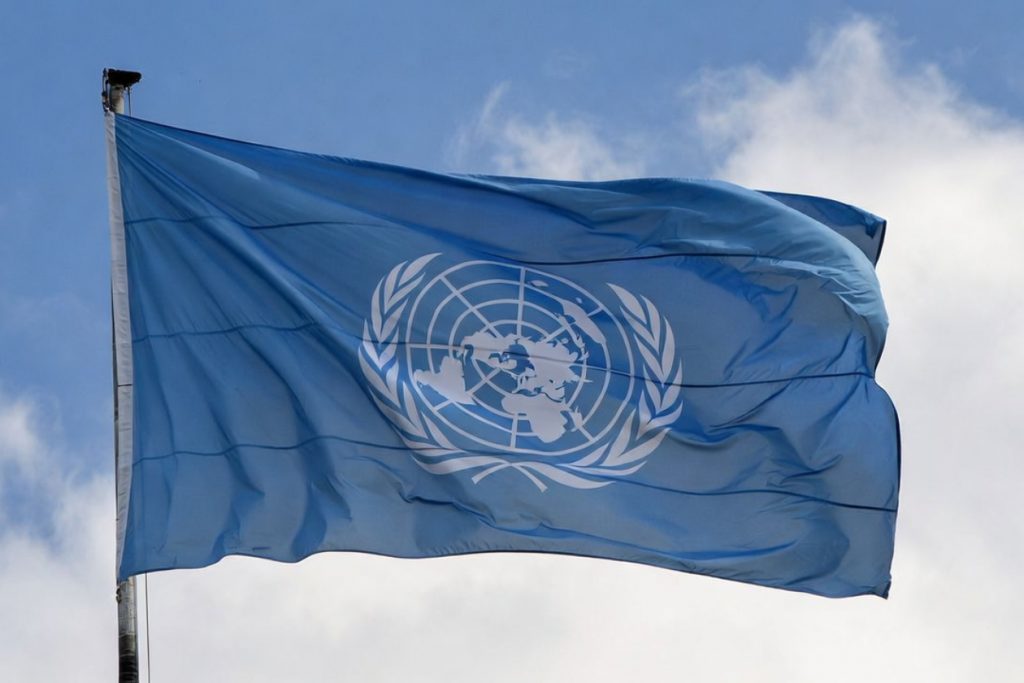
Furthermore, an anti-Western agenda from those outside the West often goes hand in hand with Western globalists’ ambitions to undermine sovereign Western democracies (as well as with Western ‘left wing’ anti-capitalism). Overall, this has helped bring about the increasing influence and effective power of unelected international bodies, in association with wealthy elites – especially the United Nations together with its many subsidiaries such as the IPCC and the WHO. In parallel with this there has been the effective transmutation of international law into supra-national law, enacted in supra-national courts beyond the power of democratic governments to change. As I have mentioned, de facto supra-national governance and laws are important factors to take into account when considering the politics of climate change.
They are also important factors to consider in relation to other issues, such as the huge increase in immigration, especially illegal immigration, into Western countries, and how it has been enabled. Such mass immigration itself undermines effective democracies, as was discussed in Sovereignty and Submission. Nor did people vote for it. It undermines the wage levels of workers in Western countries, thereby expanding profits for the wealthy. (It is a form of arbitrage, as Michael Lind discusses.13) Furthermore, it seriously undermines local communities and cultures, which can be overwhelmed by it. In this regard it is interesting that the UN’s policy regarding ‘indigenous peoples’, and the protection of them and their cultures, clearly does not apply to the indigenous peoples of Western countries such as Britain. This is a very noteworthy double standard.14
General reflections
My impression of the contemporary political world is very much the one warned about in Sovereignty and Submission. Democracy and national sovereignty are currently in very poor condition in many Western nations, and their citizens are under increasing threat. This development has come about due to a complex mixture of various factors, both from within Western societies and also from outside of them. A major factor within this mixture has been the drive to establish global governance, or at least supra-national control, by Western elites.
This development in the West has also overlapped with long term strategies to overcome Western democracies by others, such as the Chinese Communist Party wanting global hegemony and Islamists wanting to impose a global caliphate. Moreover, China, with its amalgamation of the CCP and the wealthy, also exemplifies the same combination of wealth and power that the Western globalists have increasingly developed. This is a clear demonstration that communism is actually about totalitarian rule by an elite, not about the rights and welfare of ordinary people. Klaus Schwab and his acolytes, such as Justin Trudeau, have praised the CCP.
The climate emergency agenda has very much been part of this overall development. So, when considering the issue of climate change, and the drive to Net Zero, it is vital to consider how such political forces have been at play and have influenced, and corrupted, climate science. Climate alarmism, especially enacted in Net Zero and Agenda 2030, is one factor, amongst others, bringing about what could be the destruction of many Western democratic countries.15
Currently there is fight back against this in the USA, with the present government working seriously against climate alarmism and global governance, amongst other issues. Typically, it is portrayed in the mainstream media in a very stereotyped negative way. It is too early to say whether it will succeed.
Elsewhere in the West there has been the rise of what is termed ‘populism’, which is actually people’s response to the undermining of their democratic nation states and traditional communities and cultures. Typically, the elites dismiss this not just as ‘populism’ but also as ‘far-right’. (The latter has become a very bigoted term which typically reveals far more about the person using it, than about the people they are accusing.) But people need healthy communities and the positives of their cultures, and it is extremely foolish to drastically change Western countries so that such things are seriously undermined, at least for the indigenous people in those countries.
In general, the Western world seems to be in an increasingly parlous state and its achievements in serious danger of being lost. It is almost as if it is returning, in various ways, to a medieval, pre-industrial state, with the ‘global governancers’ being the new aristocracy. In contrast, the majority of the population are increasingly in danger of becoming serfs.16
It is also of interest that one stated aim of those who wanted global government, after the second world war, was the desire to overcome nationalism, which was seen as harmful, due to its contribution to the arising of the two World Wars. Whilst, to some extent, this response is understandable, it is actually an extreme reaction. Whilst there certainly can be aggressive, bigoted nationalism, there can also be what one could call healthy nation states – ones involving effective democracy and healthy community. As a comparison, anti-nationalism is like arguing that because some people have psychopathic personalities then everyone does. But people can have healthy personalities. Similarly, just because there can be psychopathic nationalism does not mean that all nation states behave that way. There can be healthy nation states.
Ardent anti-nationalism also has an implicitly anti-democratic element to it. It is a rationale for removing the checks on power that effective national democracies have had, thereby concentrating power in the hands of an elite.
Overall, I have the impression that there are strong psychological tendencies in humans, coming from our evolutionary past, which lead to reactions against modern social and physical conditions – despite the major increases in well-being, due to industrialisation and democracy, that people have experienced. These tendencies include elites’ urge to control others, as well as to engage in Machiavellian ways against each other. There is also an apparent difficulty in understanding that democracy and industrialisation can bring about ‘win-win’ situations that radically differ from the ‘win-lose’ situations of our evolutionary history. The titan realm of the wheel of life would appear to be very persistent in the human psyche.
Footnotes
- See “Corruptible” by Brian Klaas, and “Political Ponerology” by Andrew Lobaczewski
- Superclass: How The Rich Ruined Our World; David Rothkopf; 2008
“Long accustomed to dismissing as an impossible and perhaps even dangerous fantasy the idea of global government but recognizing the need to better manage global issues, many have focused on the idea of global governance as an alternative. Typically this substitution of a few letters is a kind of code that means fulfilling government roles with mechanisms that either lack the full traditional power, authority or mandates of governments, or with hybrids that involve both governments and other actors such as the private sector or NGOs, or some combination of all these.” (p316)
- Sovereignty or Submission; John Fonte; 2011, chapter 8
“Western global governancers locate the highest authority not in democratic self-government (e.g., parliamentary or presidential democracy), but in global norms and universal human rights. They regard the “new” international law, embodying the latest (and most progressive) concepts of global human rights and universal norms, as superior to any national law or the constitution of any democratic nation-state…
These… two global competitors, democratic sovereignty vs. global governance, represent incompatible worldviews and will be locked in ideological combat during the twenty-first century. Because the conflict is over first principles, it will be intense, whether it is acknowledged or ignored by conventional statesmen, scholars, and journalists. At the same time, it is also a zero-sum power struggle with material consequences: if one side gains more power, the other side loses power. The struggle is going on beneath the day-to-day bustle of conventional world politics, but is nonetheless real and deadly serious.”
There is also a revealing passage in the Foreword to the book:
“Dr. Fonte is also one among very few scholarly defenders of sovereigntist ideas. In the academy, the media, the law, the foreign policy establishment, the corporate world, the wider political elite, and—almost inevitably—the bureaucracies that serve international institutions and nongovernmental organizations, the ideology of global governance is the prevailing orthodoxy. Those scholars who adopt a hostile or even skeptical attitude to its doctrines are in a distinct minority, resembling an endangered species in the academy. Although global governance in its current form is a relatively new idea—dating roughly from the end of the Cold War—it is increasingly the basis of government decisions, bilateral agreements, and international treaties such as the Kyoto protocols or the treaty establishing the International Criminal Court. Books, op-eds, law journal articles, proceedings of international conferences, and think tank reports advocating various aspects of global governance appear almost daily in both print and electronic media. There has been little organized opposition. Dr. Fonte’s book is a major counterblast from the sovereigntist side of the debate. It is also an example of a disturbingly familiar paradox: a lone voice speaking out on behalf of multitudes.”
- See: https://www.discoverthenetworks.org/individuals/maurice-strong/
- https://www.spiked-online.com/2023/04/24/the-inhumanity-of-the-green-agenda/
- Maurice Strong, opening statement, Rio Earth Summit 1992:
https://www.mauricestrong.net/index.php?option=com_content&view=article&id=36:rio2&catid=13&Itemid=59“The concentration of population growth in developing countries and economic growth in the industrialized countries has deepened, creating imbalances which are unsustainable, either in environmental or economic terms. Since 1972 world population has grown by 1.7 billion people, equivalent to almost the entire population at the beginning of this century. 1.5 billion of these live in developing countries which are least able to support them. Each individual person is precious. We must honour, and the Earth must support, all its children. But, overall, this growth cannot continue. Population must be stabilized, and rapidly. If we do not do it, nature will, and much more brutally.”
- A total population of 250-300 million people, a 95% decline from present levels, would be ideal.” Ted Turner – CNN founder and UN supporter – quoted in the McAlvany Intelligence Advisor, June ’96
- The Good Club:
https://www.theguardian.com/world/2009/may/31/new-york-billionaire-philanthropists
- See: https://timesofindia.indiatimes.com/blogs/toi-edit-page/looking-behind-the-scenes-of-the-well-orchestrated-climate-hysteria/
- See Rockefeller, Controlling the Game by Jacob Nordangard; 2024
- See ‘The Red and the Green: China’s Useful Idiots’, by Patricia Adams: https://www.thegwpf.org/content/uploads/2020/12/Green-reds.pdf
“While critics of the CCP’s many malign activities give it a black eye, the environmentalists’ glowing reports of China’s environmental leadership paints the country in a favourable light and acts to put Beijing’s critics on the defensive. Environmentalists, in fact, have become the highest profile cheerleaders for the communists, helping to divert attention from the regime’s worrisome pursuits. Chief among these is China’s appropriation of fossil fuel resources in the South China Sea and elsewhere in pursuit of its goal of displacing the United States as the dominant global economic and national security superpower by 2050.” P4
“China’s embrace of Western environmentalists is also understandable. To borrow a line attributed to Lenin, these environmentalists are the CCP’s ‘useful idiots’. The Communist government not only monitors their activities in China to ensure their compliance with government policy, it also exercises the ability to direct the agenda that the environmentalists will carry out via the Communist government’s de facto control over the use of funds.” p3
- See The Hidden Hand: How the Chinese Communist Party is Reshaping the World; Clive Hamilton and Mareike Ohlberg
- ‘Arbitrage’ is the practice of taking advantage of a difference in prices in two or more markets, including the price of labour. See: Michael Lind; The New Class War
”By far the most important form of arbitrage strategy employed by Western-based corporations has been global labor arbitrage.” (p55, chapter 4) - See https://www.un.org/development/desa/indigenouspeoples/wp-content/uploads/sites/19/2018/11/UNDRIP_E_web.pdf
e.g. “Article 3 Indigenous peoples have the right to self-determination. By virtue of that right they freely determine their political status and freely pursue their economic, social and cultural development.”
- In this regard it has been accompanied by two other harmful developments.
The first of these is the West-hating agenda of political correctness (now manifest as identity politics, a.k.a. the woke religion), which focuses in very biased ways on faults and imperfections in the West, whilst ignoring the serious faults elsewhere and also ignoring the many positives in Western culture. There is a serious irony to Identity politics. It uses terminology that originated with the liberal political movement against groups and tribalism; yet in practice it is very tribal – those not agreeing with it are in effect a demonised out-group.
The second harmful development is a culture of bad management practice typically enacted as top-down command and control – a recipe for serious dysfunction. Concerning this issue, see ‘The Puritan Gift’ by Kenneth and William Hopper, for discussion of good and bad management practices.
- See ‘The Coming of Neo-Feudalism’ by Joel Kotkin